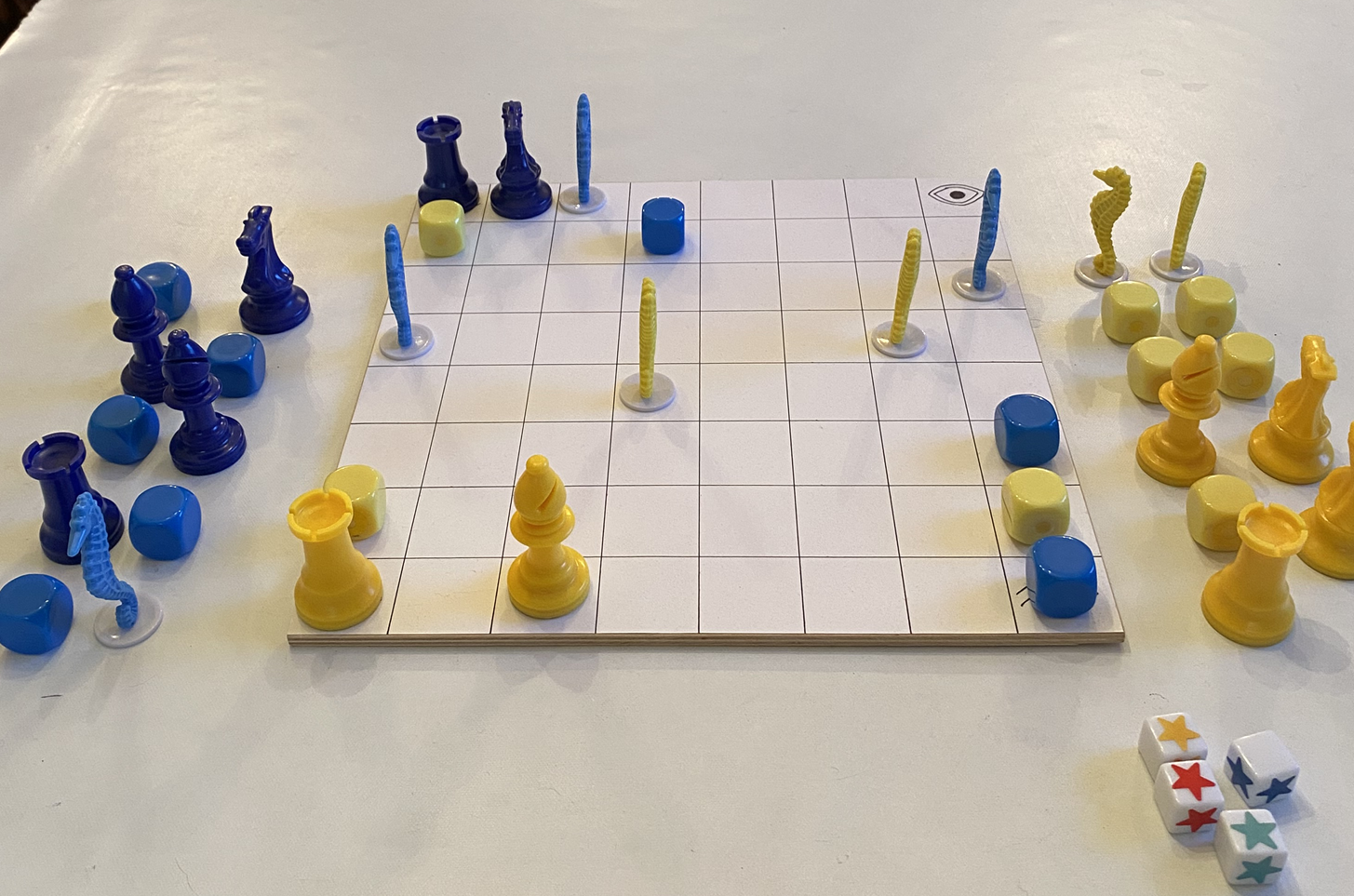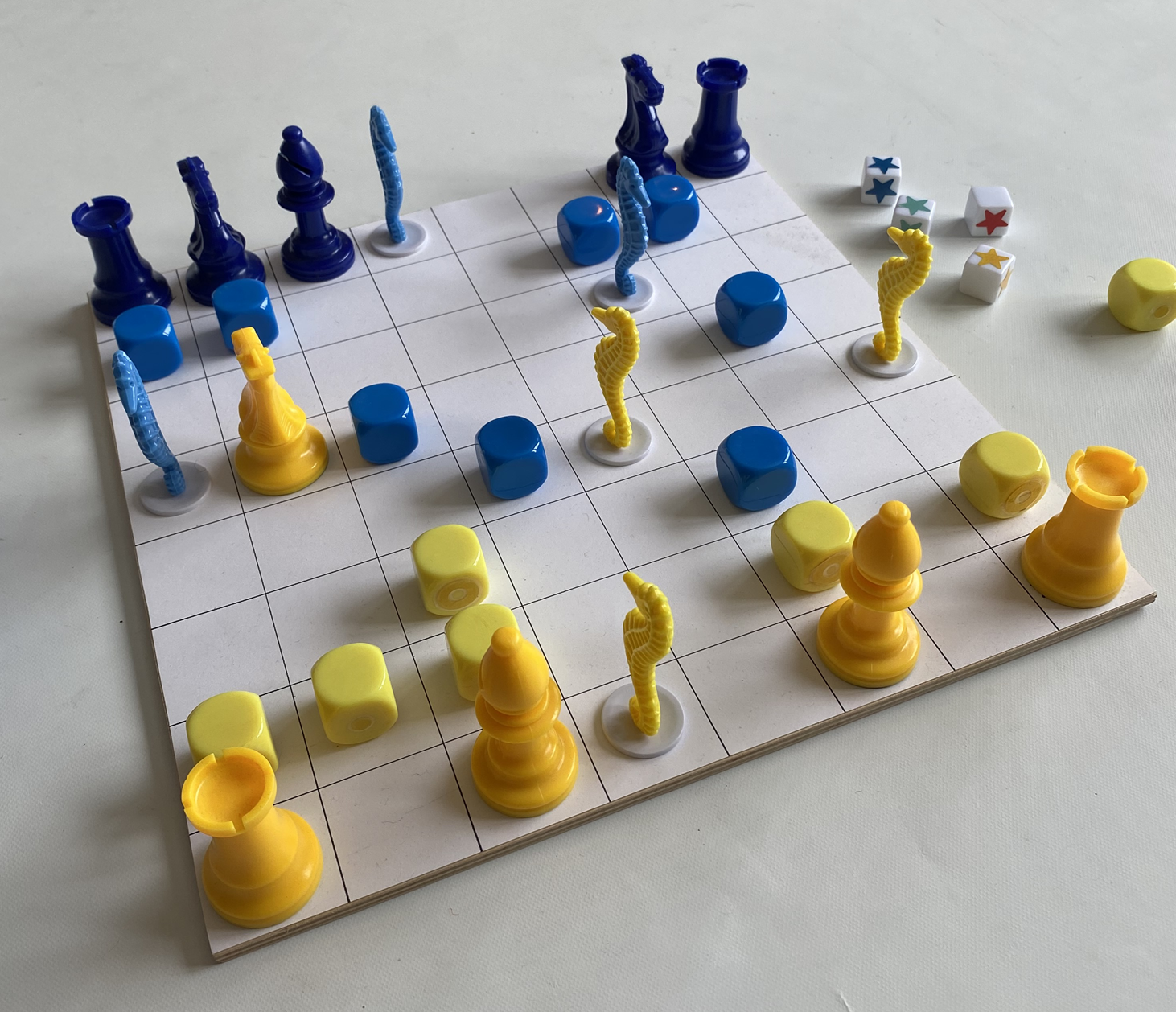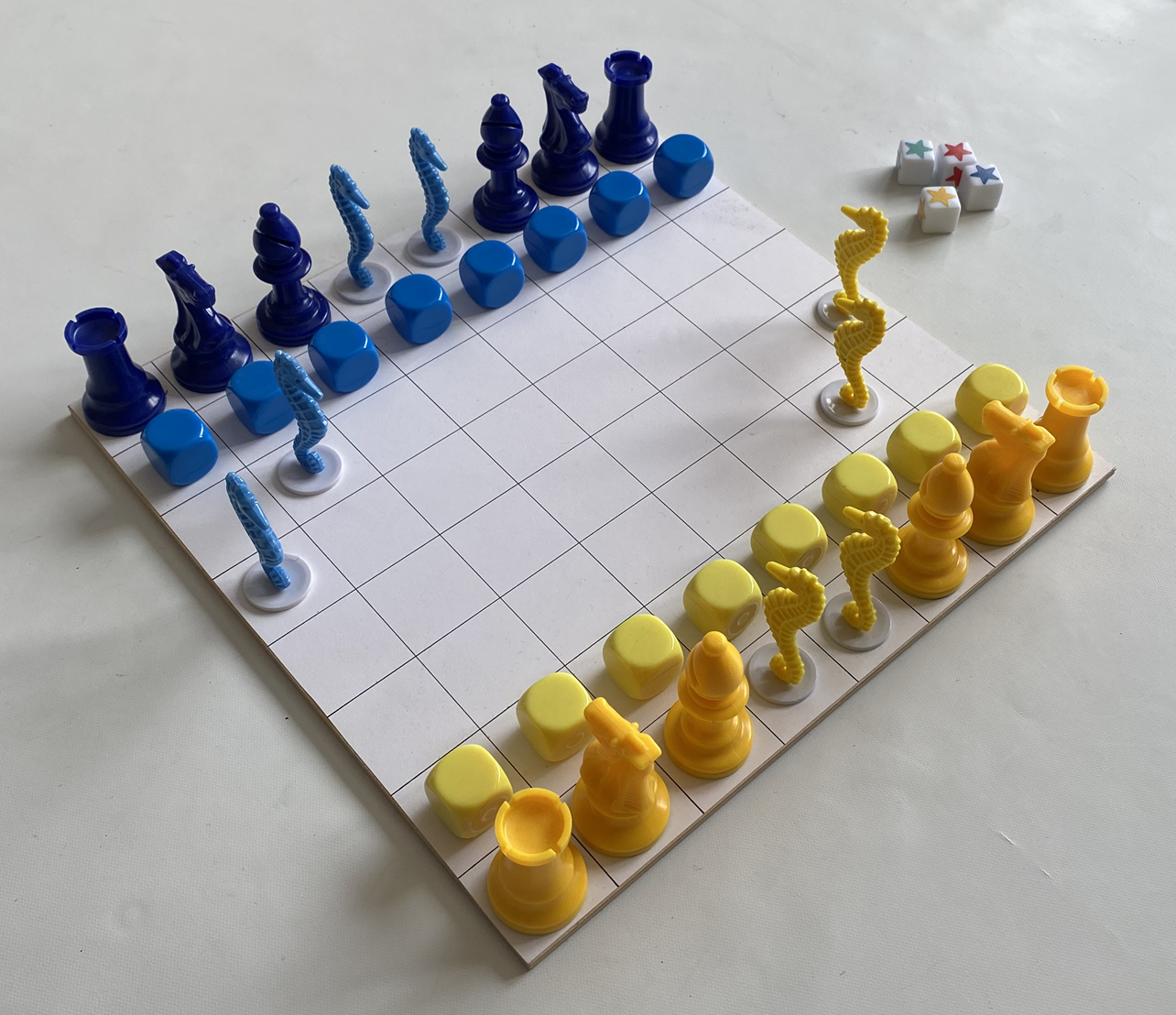
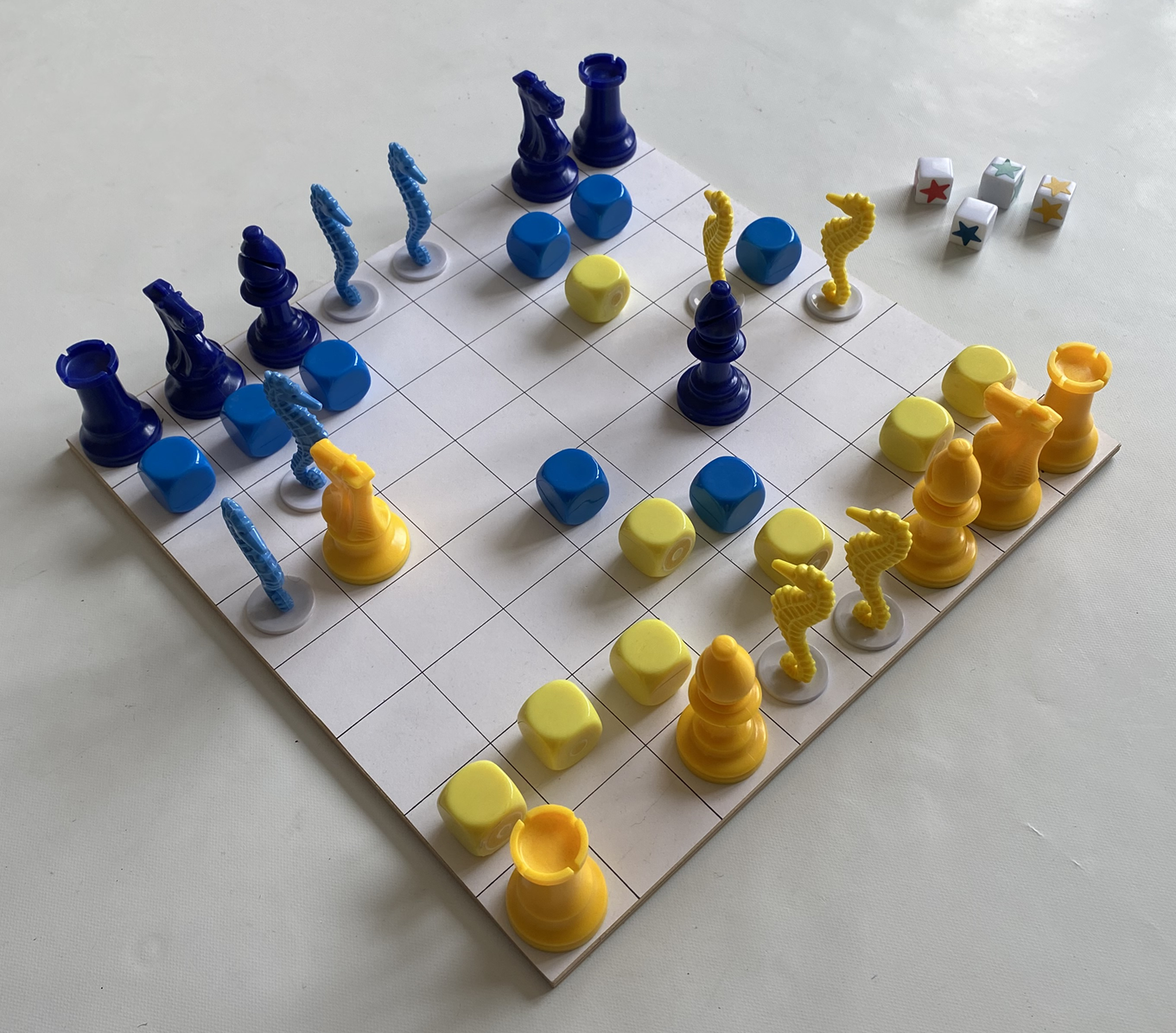
Blue pushed far forward, preventing some yellow seahorses the ability to move out. It's nice to see a knight get out and about.
Blue bishop took a seahorse. Yellow cube captured the blue bishop. The cube was the second from the right, and has shown itself as dot (will that be remembered?).
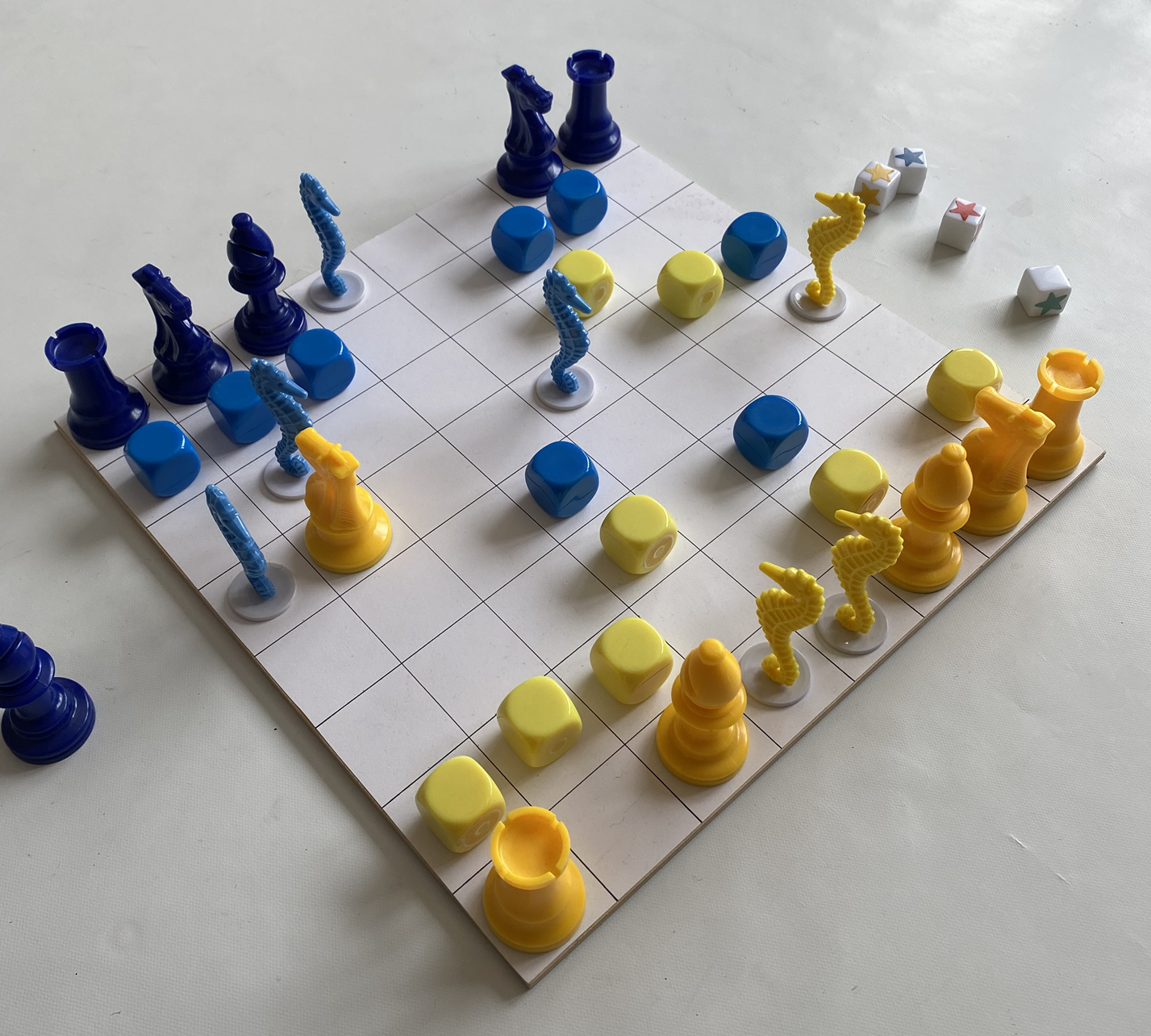
Blue seahorse has moved to the middle, with some good options for seahorse on cube. Yellow seahorse is now capable of moving out.
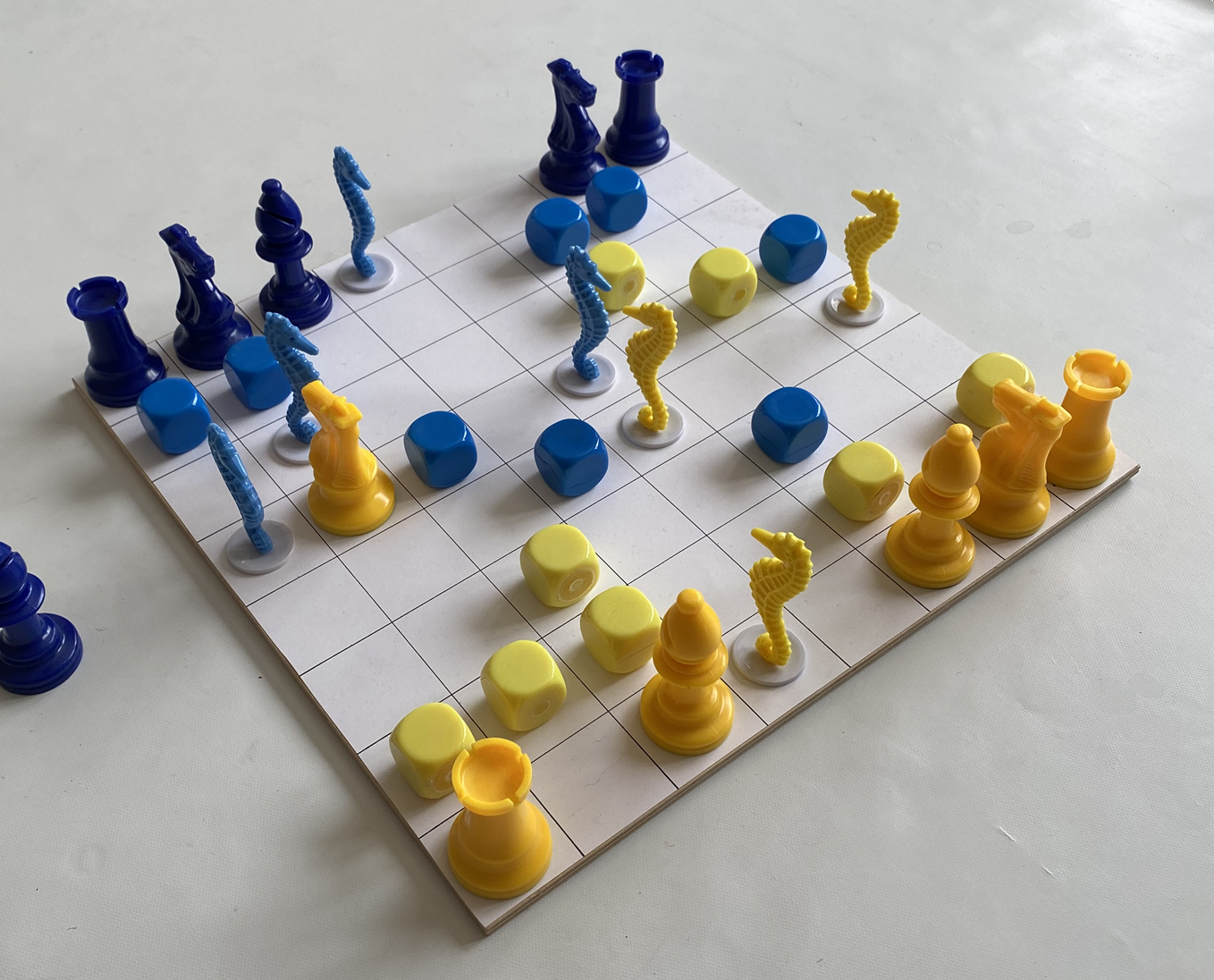
Blue cube on the left can now take the yellow knight - but shouldn't. Yellow seahorse moved up, and they can now think about taking a blue cube.
What would happen if yellow knight moved to threaten blue's water square?
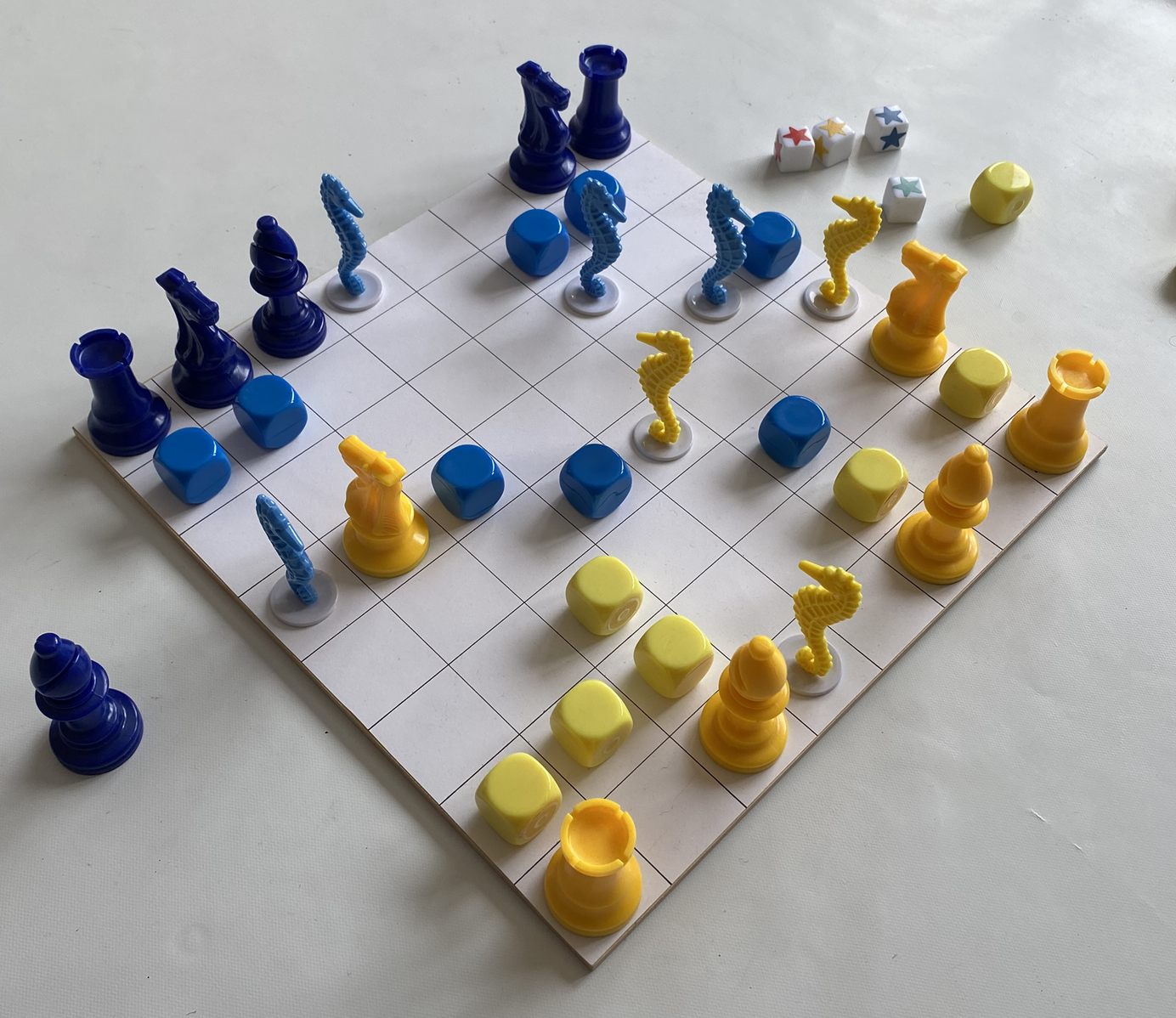
Blue seahorse takes a cube. Yellow's other knight moves out to threaten the seahorse.
Blue rolls dice to move the seahorse out of the way. A four is rolled, so a seahorse from the left unexpectedly takes out another yellow cube.
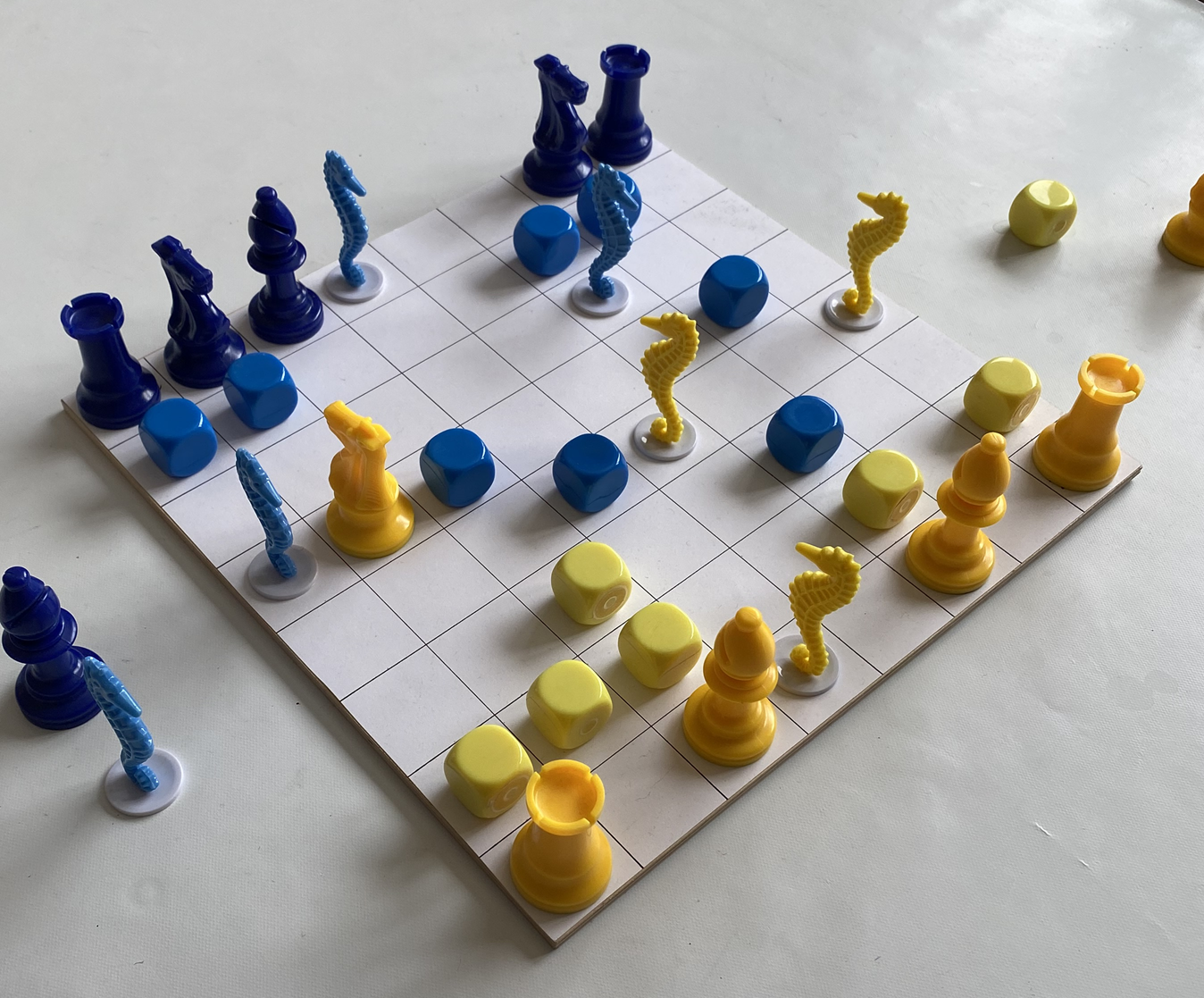
Yellow knight counterattacks against a blue seahorse. Blue cube takes the knight (and improves the far right column).
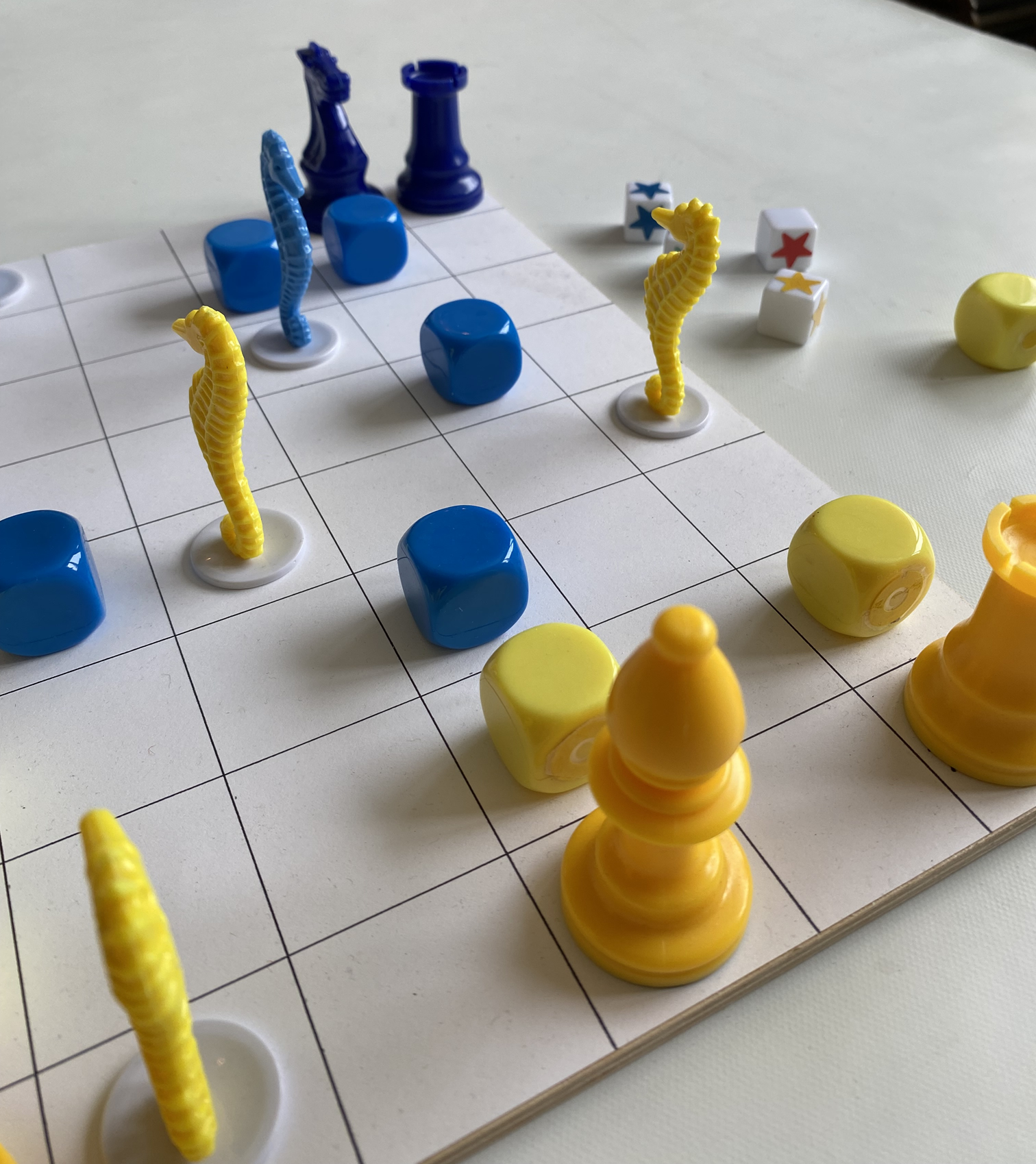
The blue cube had showed itself to be ring. Blue is SAME, yellow is DIFFERENT.
Yellow seahorse rolls to get a one or two to shield its water square. Yellow rolls three.
Here is a picture that shows that the two right yellow cubes are rings. Yellow is in trouble.
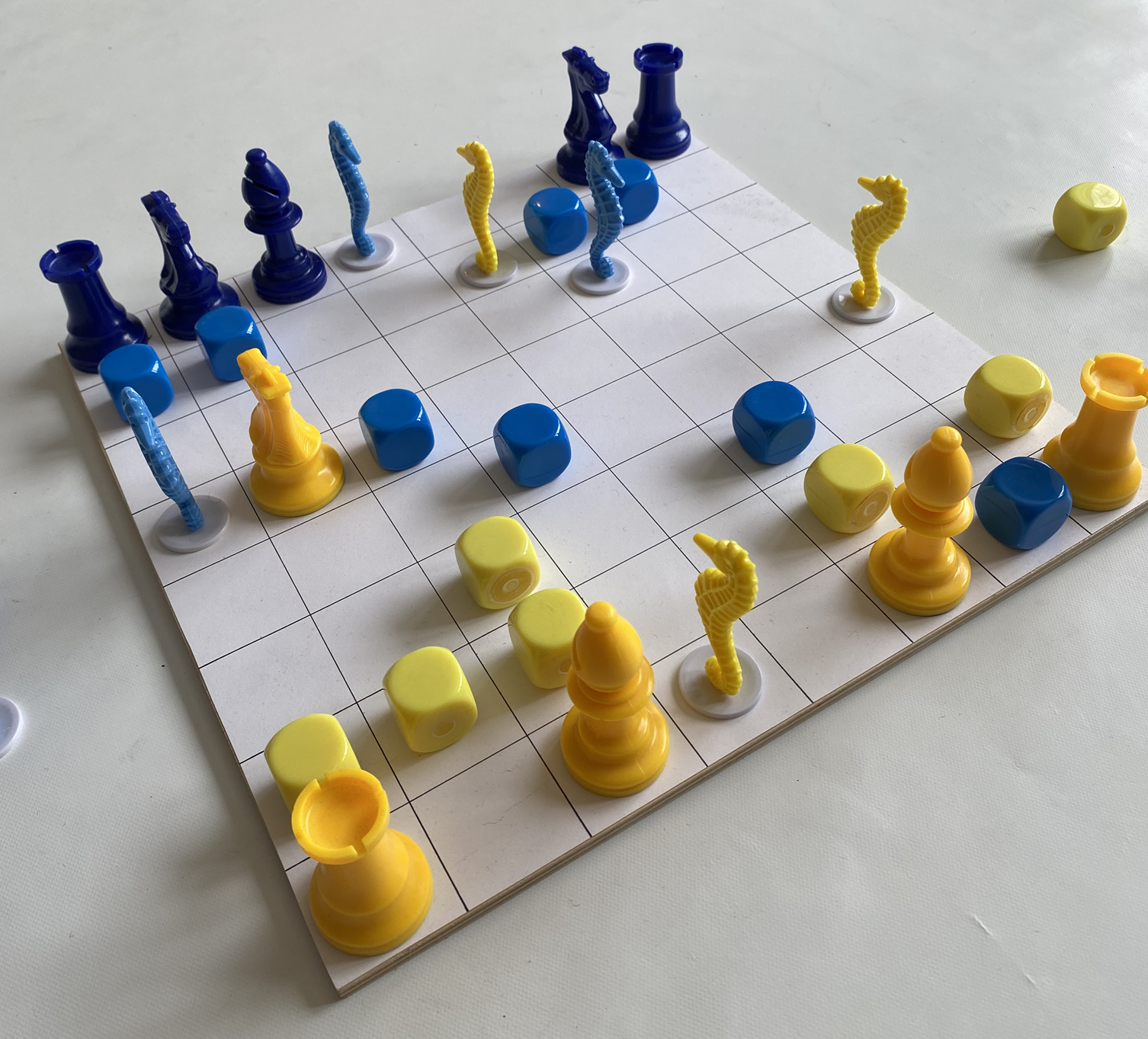
Yellow moves three spaces far up. It doesn't matter. Blue cube moves down far, about to take the yellow water square.
Perhaps yellow could have moved a cube to protect the water square. Or a bishop. The yellow ring cubes could not stop the blue cube, but blue would not know that.
Rolling for seahorses was a decent gamble, five in eight. Also things could get interesting with blue's vision square.
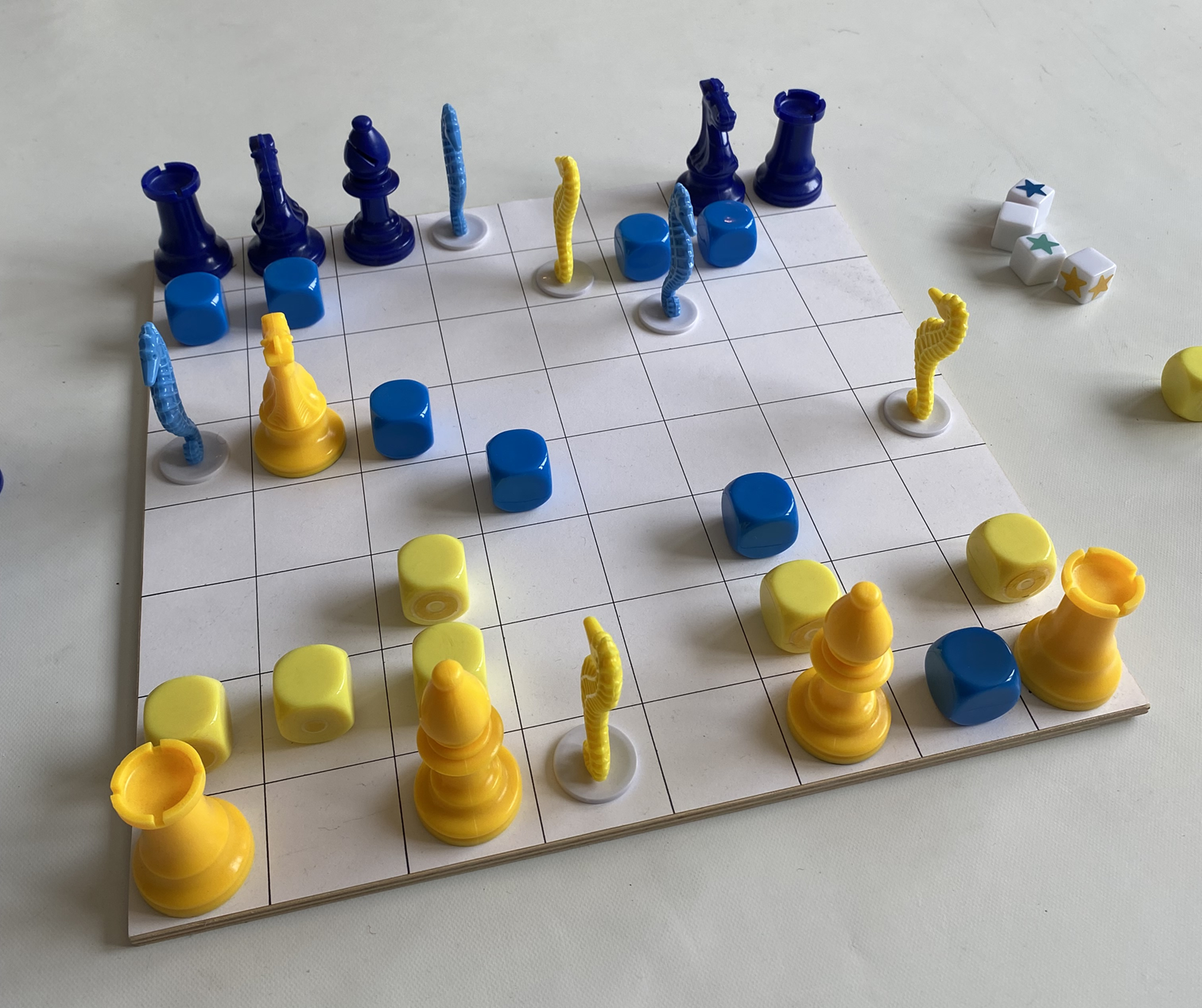
Yellow rolled two, and didn't bother to do anything. Unneessary picture
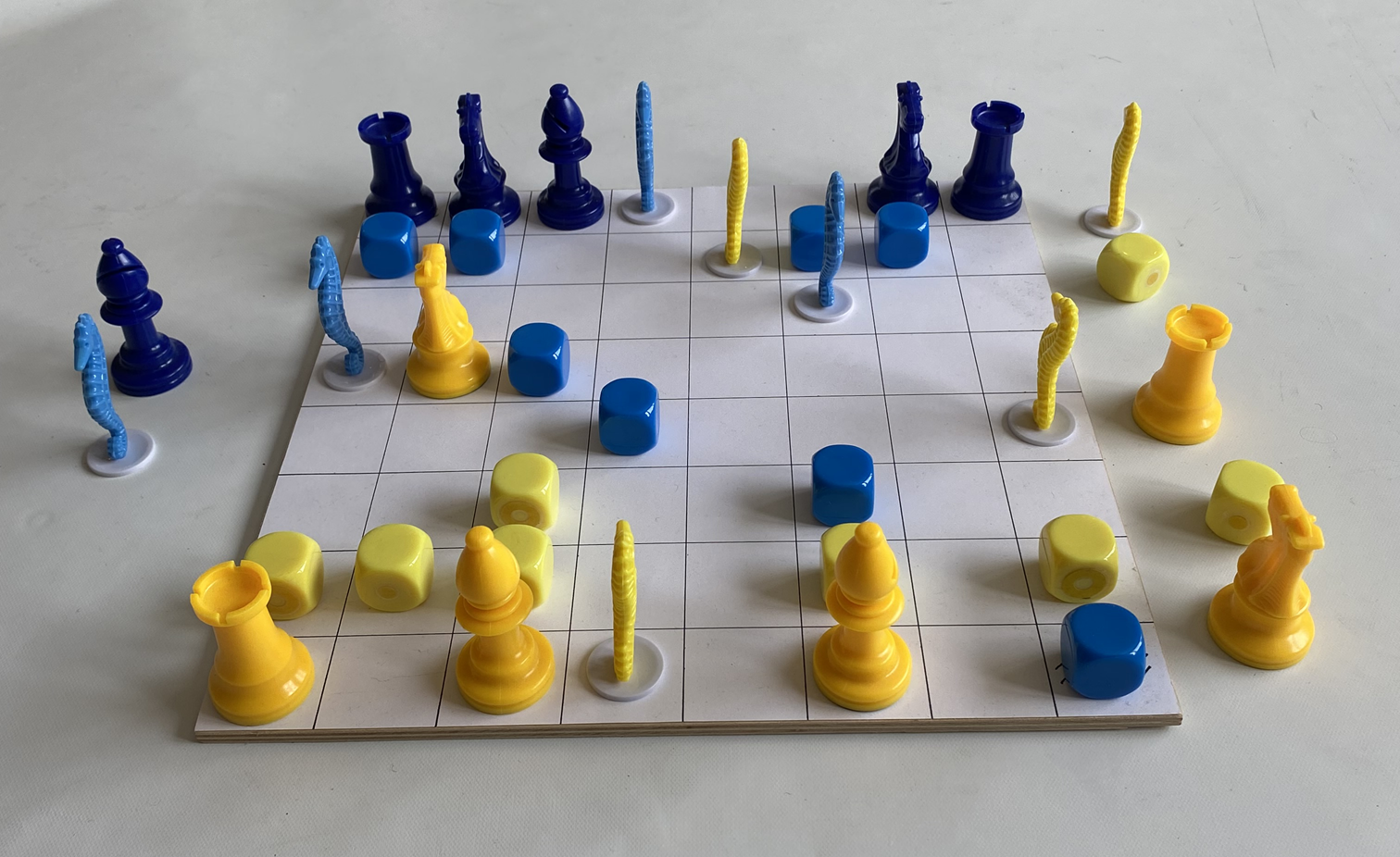
That was a quick, decisive win.
I tried another game later, and both sides were one move away from taking the opponent's water square.